Connectors
Housings and pin features can need gentle tooling, defined orientation and low drop height.
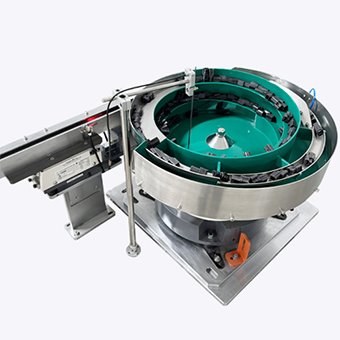
Connectors, terminals and loose parts
Feed, count and batch loose connectors, terminals, ferrules, contacts, cable clips and insulating parts into bags, boxes, kits or assembly processes.
Direct answer
A loose electrical component counter meters the bulk supply, creates a controlled part presentation and records each accepted connector, terminal or related component before releasing the preset batch.
Feeding and detection are selected around miniature features, tangling, bent pins, reflective metal, insulating plastics, damage risk and any ESD or cross-contamination controls required by the application.
Component families
Housings and pin features can need gentle tooling, defined orientation and low drop height.
Small reflective parts may tangle or overlap and require compact sensing with proven margin.
Cylindrical components can roll or telescope, affecting separation and the count boundary.
Hooked or flexible features can interlock, so bulk depth and recirculation are controlled.
Light plastic or rubber parts introduce static, sticking and optical-contrast considerations.
Separate feeders can deliver defined quantities of electrical parts and matching fixings.
Detection and handling
The preferred route may use a vibratory bowl, step feeder, linear track or flexible feeder. Optical, fibre or laser sensors suit many singulated components; vision can add shape, orientation or wrong-part information where a simple beam is insufficient.
Search-intent clarification
| Counter category | Material presentation | Primary task |
|---|---|---|
| Loose component counting machine | Bulk connectors, terminals, clips or housings | Create preset batches for packs, kits or production |
| SMD reel counter | Components retained in indexed carrier tape | Count pockets by forward or reverse reel movement |
| X-ray component counter | Reels, trays or enclosed packs | Inventory quantity using image analysis through packaging |
| Kit verification system | Presented bag, tray or assembly set | Confirm the required parts and quantities are present |
Information for a proposal
Frequently asked questions
Final suitability and performance depend on representative components and agreed acceptance criteria.
Ask about your components →Typical loose-part candidates include connectors, terminals, ferrules, contacts, insulators, cable clips, grommets and small housings. Representative samples determine whether they can be separated, detected and handled without damage.
No. A loose component counter feeds and batches individual bulk parts. An SMD reel counter measures components retained in carrier tape, while an X-ray counter estimates or detects components within reels or enclosed packs.
Often, if the feed creates stable spacing and the sensor has sufficient response margin. Very small, reflective or irregular terminals may require fibre, laser or vision trials.
Product depth, tooling contact, recirculation, track transitions and drop height are controlled around the approved damage criteria. Samples should include the most delicate and distorted production conditions.
Yes. Separate channels can deliver recipe quantities of connectors, terminals, clips or fixings into one bag, box or tray, with incomplete-kit and cross-contamination controls.
Start with the component set
We will identify the most credible feed and count route, then define the evidence needed for the next decision.