Approved components
List every included part number, revision, supplier, material and finish.
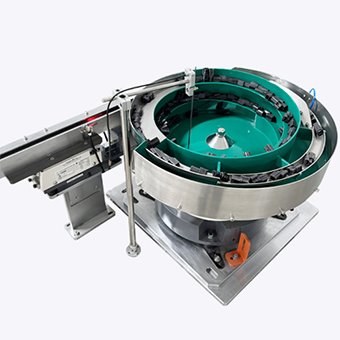
Application trials and acceptance
Turn part behaviour, count tolerance and integration unknowns into a structured trial and measurable acceptance plan.
Trial route
Define every component, target quantity, sustained output, destination, controls and environmental constraint.
Approve source, revision, material, finish and natural variation. Include difficult credible parts.
Observe separation, sensor response, slowdown, stopping behaviour, recirculation and part quality.
Confirm architecture, tooling assumptions, gate, container interface, controls and remaining risks.
Run the agreed quantities and challenges under recorded conditions before dispatch.
Acceptance criteria
List every included part number, revision, supplier, material and finish.
Define target quantities, number of repeated batches and reconciliation method.
Measure accepted completed batches over a representative period including replenishment.
State permitted adjustments, refill actions, jam recovery and operator assistance.
Challenge low level, empty feeder, sensor fault, container missing and emergency stop.
Inspect marking, damage, contamination and any rejected or recirculated components.

What to send first
Frequently asked questions
Final suitability and performance remain subject to the actual component, operating conditions and agreed acceptance criteria.
Ask about your component →Drawings do not show friction, static, nesting, bounce, normal variation or how two parts interact. Trials establish whether the proposed feed and sensing method is credible.
The quantity depends on component size, target rate, test duration and number of formats. Enough parts are needed to establish stable recirculation, replenishment, repeated batches and fault recovery—not only a few successful counts.
It should define the approved sample set, target quantities, sustained output, test duration, permitted interventions, over- and under-count challenge, container changes, low-level conditions, alarms and recovery.
Yes. Every intended production variant should be identified and included where it can affect feeding, detection or changeover.
Rate and count performance should be tied to agreed samples, operating conditions and acceptance criteria. Final guarantees depend on the project scope and trial evidence.
Start with the component
We will identify the most credible feeding and counting route, then define the evidence needed for the next decision.