Technical answers
Component counting machine questions, answered.
Clear guidance on suitability, accuracy, feeding, sensors, batching, integration, trials and acceptance.
- Sample-led selection
- Defined batch acceptance
- UK project support
Start here
The useful question is not “does it count?” but “what must be controlled for this part?”
Component geometry, target quantity, completed-batch rate and the receiving process determine the answer. The technical questions below are written to help production and engineering teams prepare a credible brief.
Frequently asked questions
Technical answers before you specify.
Final suitability and performance remain subject to the actual component, operating conditions and agreed acceptance criteria.
Ask about your component →What is a component counting machine?
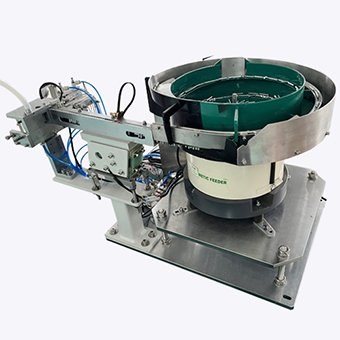
A component counting machine separates loose parts into a controlled stream, detects each passing item, accumulates a target quantity and releases the finished batch into a bag, box, kit, tray or production process.
Can one machine count different components?
Often yes, but suitability depends on geometry, size range, material, sensor response and the feeding method. Compatible parts may use stored recipes and adjustable guides; very different parts may require change tooling or separate feeders.
How accurate is an automatic parts counter?
Accuracy is application dependent. Reliable results require stable singulation, appropriate sensing, controlled gate timing and a defined recovery process. Representative component trials should establish the achievable count performance and acceptance method.
Can a counter feed bags, boxes and assembly processes?
Yes. The discharge can be designed for a bagger, open bag, carton, tote, kit tray, assembly nest, conveyor pocket or machine request signal. The interface and container-change sequence are engineered with the counter.
What information is needed for a quotation?
Send component photographs or drawings, dimensions, weight and material, the quantity per batch, required output rate, all expected variants, the receiving container or process, available space and any inspection or data requirements.
What is singulation?
Singulation is the controlled separation of bulk parts so individual components reach the counting or pick point one at a time in a detectable condition.
Can the machine count mixed components?
A counter can be designed to prepare mixed kits using separate channels. Counting an uncontrolled mixture through one detector normally requires a validated vision or classification method and a suitable reject route.
Can very small components be counted?
Often yes. Miniature parts may need fibre-optic, laser or vision detection, careful control of vibration and a detection zone that prevents two parts passing together.
What is the difference between counting and checkweighing?
Counting detects individual parts or derives quantity from unit weight. Checkweighing measures the finished pack mass and may provide a secondary screen, but tare and individual-part variation affect what it can prove.
Does the system require compressed air?
Some feeders do not, but gates, diverters, blow-off, tooling and bag clamps may use compressed air. Utilities are defined after the architecture is selected.
Can the counter be integrated with an existing line?
Yes, subject to a review of mechanical space, line height, signals, safety boundaries, guarding, documentation and responsibility for modifications.
Can the system be guarded?
Yes. Guarding, access doors, interlocks, loading points and fault-recovery access should be developed around the complete integrated machinery risk assessment.
How long does changeover take?
It depends on the product family and tooling. A compatible recipe change may be quick; different track profiles, sensors or contact parts may require mechanical change parts and verification.
What maintenance is required?
Typical tasks include cleaning tracks and sensors, inspecting fasteners and springs, checking gates, confirming sensor alignment and monitoring wear. The final schedule depends on the selected equipment and environment.
How should I specify the required rate?
Use completed accepted batches per minute or hour at the final hand-off, including normal replenishment, container changes and permitted interventions—not a short internal peak.
Can count data be sent to a factory system?
Potentially. Batch, recipe, alarm and status data can be exchanged through the chosen PLC, network and site protocol, subject to the controls scope and customer requirements.
Start with the component
Send a photograph, target quantity and required output.
We will identify the most credible feeding and counting route, then define the evidence needed for the next decision.