Independent feed channels
Each part type receives the most suitable feeder, sensor, target and low-level control.
Multi-component batch preparation
Coordinate several feeders, verify each recipe quantity and release a complete hardware, service or assembly kit to its pack or workstation.
Kit integrity
All channels must share a single pack identity. The control system tracks which quantities have been delivered, prevents early pack movement and identifies any interrupted or incomplete kit for recovery.
Cycle time is modelled from the slowest component, feeder recovery, container presentation and any verification stage.
Kitting architecture
Each part type receives the most suitable feeder, sensor, target and low-level control.
Stored products activate the correct channels and quantities with access-controlled changes.
Chutes and gates prevent components crossing between packs or entering the wrong channel.
The pack advances only after every target count and any additional check is satisfied.
Interrupted packs are held, identified and completed or quarantined through a defined route.
Recipe, completed-kit, alarm and status information can be made available to site systems.
Dedicated or flexible?
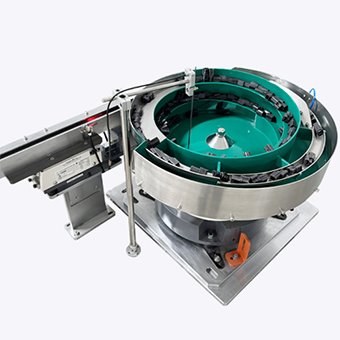
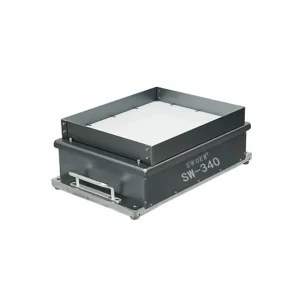
A repeat fastener may suit a dedicated bowl feeder. A delicate or frequently changing component may favour a flexible platform or operator-assisted pick. Count-by-weight may be credible for a stable high quantity. Hybrid cells combine these methods under one recipe.
Typical kit applications
Frequently asked questions
Final suitability and performance remain subject to the actual component, operating conditions and agreed acceptance criteria.
Ask about your component →Each component type has a controlled feed and count channel. The kit recipe sets the target for every channel, and the controls release or accept the pack only when all required quantities are complete.
The practical number depends on cycle time, footprint, component behaviour and how channels are arranged. The concept balances parallel feeding against pack presentation and access.
Yes. Stored recipes can define component quantities, active channels and format settings, with controlled operator access and changeover checks.
The system should stop or hold the affected kit in a known state, identify the incomplete channel and provide a controlled replenish-and-recover sequence.
Yes. Count completion, vision, checkweighing or operator confirmation can be included before the bag, box or tray is accepted.
Start with the component
We will identify the most credible feeding and counting route, then define the evidence needed for the next decision.
A counting channel can reach its target while dispensing the wrong screw, seal or connector. Counting proves quantity within the configured method; it does not automatically prove that the replenishment material belongs to the active kit. This matters most when neighbouring components look similar and use the same discharge route.
Add a replenishment identity check to the kit specification. State the approved component reference for each channel and how the operator or control system confirms a refill. Depending on the application, this may involve labelled loading points, scanning a supply container or inspecting a distinguishing feature. The method should be assessed against the actual mix-up, especially where two parts share colour and overall dimensions.
Include a deliberately incorrect component reference in the acceptance review and agree the response before any material is released into a kit. Record what happens to an incomplete pack if a replenishment error is discovered midway through the batch. This gives purchasing a clearer basis for comparing basic counters with complete kitting systems. Send a recipe list and the component pairs most likely to be confused when requesting a project assessment.
Only if a suitable identification function is included and proven. A basic count channel can count the wrong material.
At the relevant loading or replenishment step, with additional feature inspection where needed to control the actual mix-up risk.
Explore counting with vision inspection Prepare representative counting trials