Screw counting machines
Machine screws, self-tappers and wood screws assessed for head presentation, shingling and length variation.
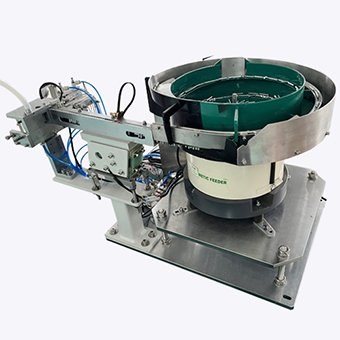
Screws, nuts, bolts and fixings
Automatic systems separate loose fixings, detect each accepted part and release a preset quantity into bags, boxes, kits or assembly processes.
Direct answer
A fastener counting machine automatically feeds loose screws, nuts, bolts, washers or other fixings, creates one validated count event per part and discharges the preset batch to its next container or process.
The machine is specified around the real component family, quantity, sustained output and hand-off—not around a generic pieces-per-minute claim.
High-intent applications
Different fixing geometries create different feeding risks. Each intended production variant is included in the assessment.
Machine screws, self-tappers and wood screws assessed for head presentation, shingling and length variation.
Robust feed paths for hexagonal, flanged or specialist formats, with positive separation before detection.
Thin parts require controls for sticking, double layers and closely spaced sensor events.
Long, lightweight or spring-like components are assessed for bridging, interlocking and tangling.
Preset batches can handshake with bag presentation, printing, sealing and incomplete-pack handling.
Several feeders can contribute verified quantities to a furniture, service or assembly kit recipe.
Selection inputs
Engineering comparison
| Component behaviour | Likely starting route | What must be proven |
|---|---|---|
| Repeat screws with stable geometry | Vibratory bowl and optical sensor | Head-to-tail separation, pitch and stop control |
| Long bolts or pins | Step feeder or lift-and-track route | Bridging, tangling and controlled transfer |
| Thin washers | Dedicated tooling and optical detection | Double layers, sticking and sensor resolution |
| Mixed kit recipe | Multiple dedicated channels | Cross-contamination and recipe reconciliation |
Frequently asked questions
Final suitability and performance depend on representative components, operating conditions and agreed acceptance criteria.
Ask about your component →Typical applications include screws, nuts, bolts, washers, rivets, pins, clips, wall plugs and inserts. Suitability depends on size range, geometry, surface finish and whether parts nest, bridge or tangle.
A metered hopper feeds a bowl, step feeder or linear track that removes overlaps and presents a controlled stream to the sensor. Tooling and recirculation are developed around representative screws.
Compatible sizes may run with recipes, adjustable guides or change tooling. The complete format range should be trialled because head style, length and finish can change feeding and sensing behaviour.
Yes. A completed quantity can release to a pre-opened bagger, an operator-held bag, a carton, kit tray or assembly station with ready and complete signals.
Accuracy is established through representative component trials and an agreed factory acceptance test covering target quantities, sustained output, refilling, stops, jams, recovery and container changes.
Start with the component
We will identify the most credible feeding and counting route, then define the evidence needed for the next decision.