Clips and retainers
Hooked features may interlock, bridge or arrive in unstable orientations.
Injection mouldings and plastic components
Automatically feed and count clips, caps, plugs, spacers, housings, inserts and other moulded parts into bags, boxes, kits or assembly processes.
Direct answer
A plastic parts counting machine meters the bulk supply, separates mouldings into a controlled presentation and detects each accepted component before releasing the required batch. Where one-by-one singulation is impractical, a validated vision or count-by-weight route may be assessed.
Reliable selection must include the light weight, static, colour, translucency, nesting and normal flash or dimensional variation found in real production.
Component families
Hooked features may interlock, bridge or arrive in unstable orientations.
Hollow profiles can nest, telescope or require a defined orientation before counting.
Small cylindrical parts may roll, bounce or present minimal optical area.
Asymmetric shapes can suit dedicated tooling or vision-guided presentation.
Colour and translucency changes require a sensor and background with proven margin.
Cavity, sprue and flash differences can affect flow, countability and inspection rules.
Feeding and sensing
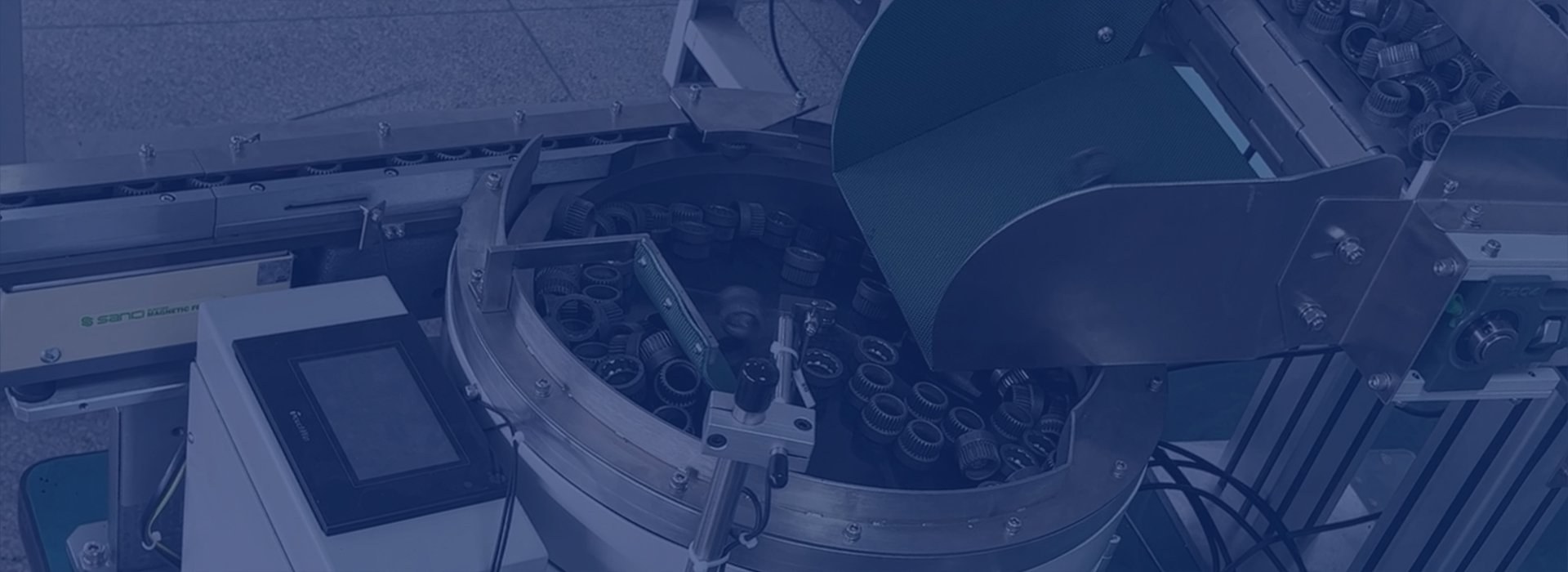
Repeat mouldings may suit a vibratory bowl, linear track, step feeder or centrifugal system. Higher-variety families can justify flexible feeding or vision. Sensor choice is then based on the smallest visible feature, optical contrast, speed and the risk of two parts reaching the count zone together.
Risk-to-evidence map
| Variation | Why it matters | Trial evidence |
|---|---|---|
| Colour or translucency | Changes detector contrast or image response | Signal margin for every approved variant |
| Static and low mass | Causes clinging, erratic flow or chute retention | Long-duration feed and refill behaviour |
| Flash or short shot | Changes geometry and may cause jams or false accepts | Defined defect samples and reject criteria |
| Nesting or interlocking | Two parts may travel as one presentation | Separation performance at sustained rate |
| Cosmetic surface | Recirculation or drops may mark the part | Approved handling and damage samples |
Information for a proposal
Frequently asked questions
Final suitability and performance depend on representative mouldings and agreed acceptance criteria.
Ask about your components →Yes. Clips, caps, plugs, spacers, inserts, housings and other repeat mouldings can be fed and counted where the approved variants can be presented and detected reliably.
Static can make lightweight parts cling to one another or to the hopper, track and chute. Material, grounding, humidity, ionisation and the feed path may need to be considered during trials.
Often, but the sensing arrangement must be matched to the material. Through-beam, fibre, laser, background, transmitted-light or vision methods may be trialled across every approved colour and translucency.
Potentially, if a separate inspection requirement is defined and the feature is consistently visible. Count acceptance and defect inspection should each have validated rules and reject handling.
Yes. The completed quantity can be released to a bagger, box, tote, kit or assembly process, with signals controlling container readiness and batch completion.
Start with the production mouldings
We will identify the most credible feeding and counting route, then define the evidence needed for the next decision.