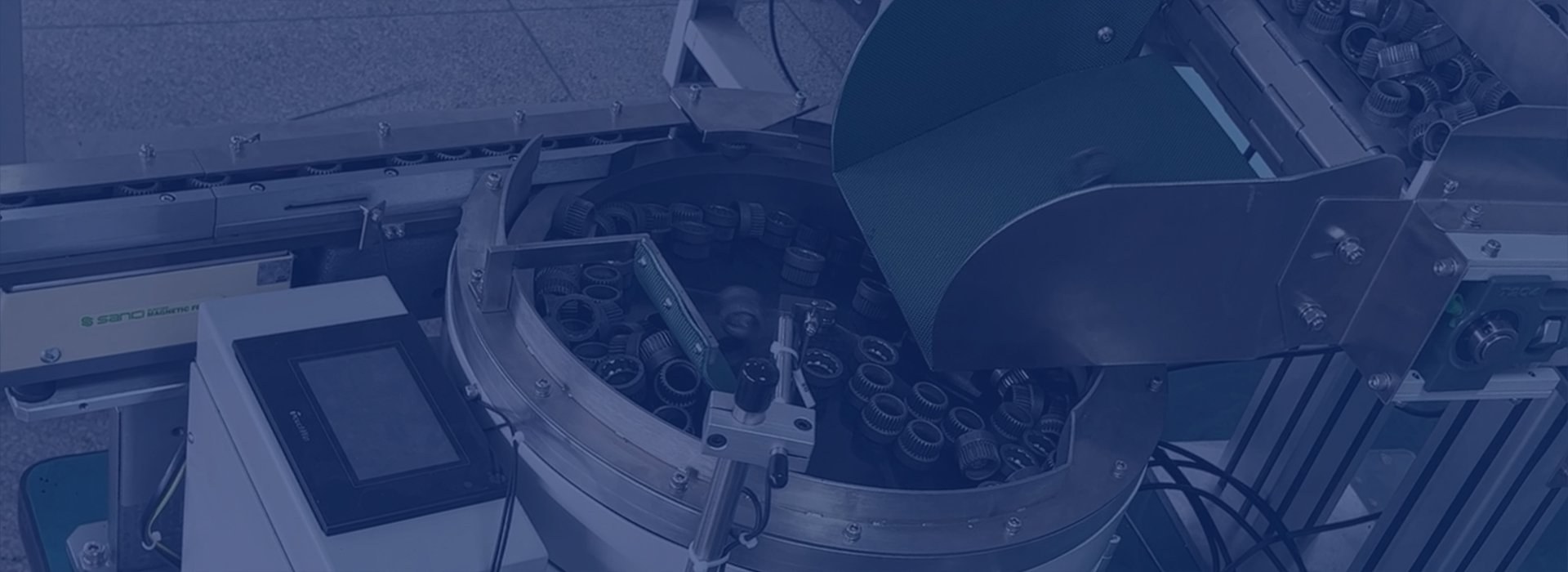
A component counter converts an uncontrolled bulk supply into a known quantity. The essential engineering task is to create one reliable count event for each accepted component—and a clean boundary between consecutive batches.
1. Control the bulk supply
A hopper, elevator or manual load introduces parts to the feeder. Product depth matters: overfilling can increase pressure, create overlaps and reduce separation performance. Level sensors commonly start and stop replenishment to keep the feeder within its stable operating range.
2. Singulate the components
The feeder separates components so they approach the detector in a known lane and spacing. A vibratory bowl uses a tooled track; a step feeder lifts parts towards a linear section; a centrifugal feeder uses rotary motion; a flexible platform redistributes parts for vision or robotic picking.
The count is only reliable if every accepted component creates one—and only one—detectable event.
3. Detect each part
A through-beam sensor may count each interruption. Reflective, fibre-optic, laser, inductive or vision methods may suit other materials and sizes. The detection zone must account for response time, ambient light, vibration, background and the possibility of closely spaced parts.
4. Accumulate the target quantity
The PLC or counter controller adds each valid event to the active batch. The target quantity, feed speed and slowdown point can be stored in a recipe. Some systems count directly into the final container; others pre-count into an intermediate chamber.
5. Create a positive batch boundary
As the target approaches, the feeder may slow to reduce overrun. A gate or escapement stops additional parts crossing the boundary. Intermediate accumulation can let the upstream feeder continue while the previous bag or box is removed.
6. Release and confirm
The completed batch is discharged only when the receiving destination is ready. The counter then confirms release, closes the gate and starts the next quantity. For automated lines, ready, demand, complete and fault signals coordinate the sequence.
7. Recover without losing count state
Low product, jams, missing containers, emergency stops and manual intervention must each have a defined response. The operator needs to know whether the current batch is complete, recoverable or should be quarantined.
What determines count accuracy and speed?
- Component separation and stable pitch
- Sensor suitability and response margin
- Mechanical overrun between detection and gate
- Target quantity and final-count slowdown
- Container change and buffer capacity
- Product variation, contamination and recirculation
- Fault handling and operator intervention
Headline parts-per-minute figures are not enough. Acceptance should measure completed, correct batches under agreed operating conditions over a representative period.